Plasma injection plugs and their uses
For many years, engineers in Eastern Europe were paid to do R&D directly out of defence budgets.
As these small groups worked directly in the remit of the USSR to provide aerospace solutions, there was never any fundemental question of cost or market validity. It was done by well funded institutes and universities.
This enabled solid research to be done on rocket propulsion particularly at hypersonic conditions.
One of the many patent applications was for a simple automotive spark plug which exhibited very unusual characteristics of flame propagation under part load and under ultra lean conditions, where normal spark ignitors will get severe misfires.
Lean burn technology for low octane fuels and alternatives like LPG have never been so relevant as during "lean times".
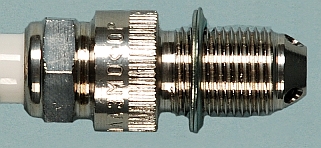
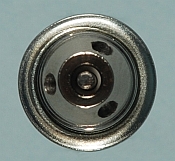
The plug consists of a simple copper core recessed into a pre chamber.
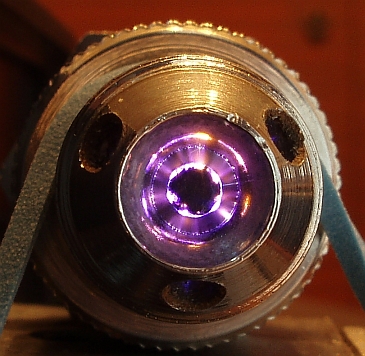
During the engine cycle, the pre-chamber "captures" a quantity of fresh fuel, and when this is fired internally generates a very fast stream of ionised and burning mixture which is forcibly ejected into the chamber.
Flame front generation is therefore assisted, happens some 2-3 times faster than normal, and is much more complete.
When this is combined with small changes in advance curve, and optimisation of fuelling, the result is to give a significant increase in low rpm torque, an absence of pinking, and the ability to run lower octane fuels with some INCREASE in torque.
As this is a rather win-win situation, it's usual practice, to combine this with some special requirements, such as extra towing performance, running large usually uneconomic engines in town conditions, and using low cruise fuelling with LPG or bio ethanol.
There are some major issues with modern catalytic convertor equipped vehicles, and these are discussed on
page 2.
list of suitable cars for plasma injection plugs, prices, model numbers
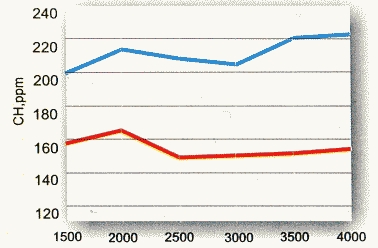
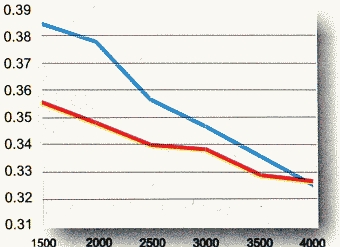
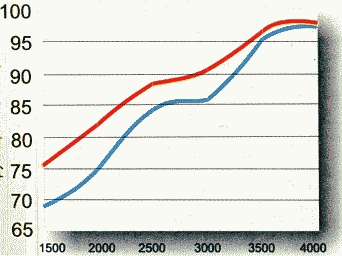
Here are a number of graphs produced using a 1600cc OHC 2 Valve research engine on an engine dyno.
This was part of a student project to discuss an emission control and NOx/HC package applicable to older vehicles running carburettors and low octane (91 RON) fuel.
As you can see, this research is equally relevant to larger capacity, poor designed engines running low octane fuel, bio ethanol or LPG which has a lower calorific value;-
Fuel delivery/h
Torque curve nm
Links | Specialist Facilities