Some myths & truths:-
Here is a rather overdue page on this excellent system beset by British bodging
All involvement in this was purely accidental.
here are the answers to the above:-
Here are some videos giving the glorious sound of FOUR, SIX & EIGHT cylinder cars on this superb system.
Few EFI systems are even sequential.
Lucas Pi can't be anything else but sequential.
The unusually high pressure guarantees an ideal fuel injection cone form & very good dispersion only available in the very "high end" EFI systems which people cannot afford to fit on a Triumph engine.
Here is a perfect example of a 2L Pi car on test delivering nearly 150bhp from a STANDARD engine at 6600rpm.
Such an engine also delivers over 30mpg, because it runs the correct air to fuel ratios over a wide range.
Now the same nonsense using the same vocabulary comes from other quarters...a mere 25 years later....
This kind of stuff eats into the very credibility of British engine tuning.
Nothing ever seems to change, does it?
It is clearly impossible to beat an "open loop" system such as Lucas injection which has zero restriction, factory designed properly designed, well flowing, throttle butterfly support using an aftermarket carburettor system using chokes, jets and only average inlet manifold design.
Can your weber carburetted engine get even close to 450bhp?
This is more or less the limit of the Lucas mechanical injection system.
Argument closed!
Main drawbacks on the Lucas system:-
We originally set up metering unit figures to match GOOD heads done by GOOD engineers.
As soon as you let your "Canley Classics", "Kingston Sportscar", Coventry & Birmingham bodgers & a host of other mediocre companies loose on "unleaded conversions", the result is utter chaos, with most of the heads flowing considerably less than the original....which inevitably screws up injection calibration.
(which wasn't very good to begin with).
We tested every single aftermarket inlet valve, finding they were ALL bad or mediocre, some flowing hardly more than Standard.
Go figure, and go read the "cylinder head" page!
We spent 100s of hours going through each individual result, flow bench testing heads, & analysing what contributed to what. Most of them had "serious issues".
We tested heads which were so bad they were as good as destroyed(!)
Strangely enough the heads we produced & gas flowed, not only showed a very clear 20bhp gain, but the injection system was DEAD RIGHT and didn't need recalibration afterwards... as were conversions we engineered using a STD head and only a 6-3-1 manifold of mediocre quality.
If you are intent on running ONE race a year on the Nurburgring it's not difficult to produce a metering unit delivering 2-3% less fuel specifically.
HOW TO USE THIS SYSTEM FOR MODIFIED TRIUMPH ENGINES:-
I can't repeat the importance of this enough.
Fuel injection DOES NOT work like carburettors it works by mass air flow.
Modern systems MEASURE this flow.
A high pressure mechanical system can only work by direct acting throttle cams or by part throttle vac measurement.
This air flow has to be perfectly linear-directly proportional to engine revs for the lucas system to work correctly.
Any deviation from this and you wil be in trouble, which is why a lot of time on this site is spent showing people how important it is to have tuned engines, cams & heads that WORK properly, giving almost completely flat torque delivery.
The original barrel type inlet collector has 6 short trumpets incorporated into the design.
Whilst this is just adequate to cope with the demands of a "good" TR5 engine, it's right on the limit at 140bhp with a brand new air filter.
As soon as the air filter starts to clog, (anything above about 500-800 miles on a paper filter), the maximum fuel setting at 41.5cc per minute exceeds the engine demand in air.
Once this modification has been done, the engine can be taken up to blueprint standard.
It can produce as much as 158bhp once the rear silencer constriction has been sorted out.
This can all be done using standard components and exactly the same calibration as the manufacturer, again because the air flow remains directly proportional to engine speed, without any attenuation in the flow caused by "restrictions".
Sounds obvious eh? Sure it is, but not to the Triumph tuning fraternity!
Loads of nonsense is talked about this modification, especially the queer idea of needing to fit a "single pipe system" from whatever exhaust manifold is used.
This is total balloney.
It's perfectly clear a single pipe system of 2" possesses the SAME cross sectional area of the original system, which has 2 smaller pipes the entire length of the chassis to the rear silencer but has an entirely different resonant frequency!
Why change?
Because some idiot (maybe Kastner?) has told them it's better on a USA detuned car so BUY it....! (which of course results in more noise and less torque)
It's now fundamental to understand how the adaption of a high effiency exhaust system affects the way the Triumph engine works.
The immediate effect of this modification is to make the engine run MEGA-LEAN.
For some reason, the so called "specialists" doing this mod, never could be bothered to inform buyers this would result in not MORE but LESS power.
Why does this exhaust have this effect?
Quite simply because the CP type camshaft having a good 1.5mm of overlap at TDC sees now a larger depression at the inlet tract.
On the TR5 the idle depression was designed to be around 8".
Now instead of this, the engine at idle struggles to produce 7-7.5" as there is less constriction (so runs rich idle)
,- but as soon as the exhaust begins to work (around 2500rpm) the actual inlet flow will increase to around the MAXIMUM the inlet valve can support....(about 69cfm at max lift of 0.360").
The only thing preventing this highish figure from developing the theoretical maximum of 188bhp is the poor flow of the exhaust valve itself & the sheer incompetence of the people making the 6-3-1 manifolds being sold now.
So, you can see, introducing a fairly simple modification can upset the linear mass air flow we are after all along.
At this point the ONLY solution is to recalibrate the fuel injection system. It usually entails moving the maximum fuel delivery up from 41.5 to around 48cc per min (rotor speed).
In practice it means you can move a really healthy blueprinted STD engine up to a good solid 175bhp without it affecting reliablity in the slightest.
This is quite close to the theoretical maximum we mentioned before,
but it will healthily exceed the ability of the original inlet collector in air flow, despite our mods to the filtration.
(A TR6 engine can flow in excess of 400cfm with a STANDARD head...)
Moving to ram pipes solves the loss of high speed air flow on modification 2.
Once the engine speed passes around 4000rpm this becomes absolutely essential, or the engine will run progressively rich at high speed.
On a 2L pi car this limit is reached as low as 5000rpm, despite the 2L having fuel demands at least 10% lower than a 2.5L
What happens when you mess with the head & camshaft:-
We now come to the "achilles heel" of the tuning business
Most tuning companies love to sell their camshafts & cylinder heads without really any sound engineering understanding of what on earth will happen with a Lucas Pi system if you start making non-linear air flow demands.
This was EXACTLY the criticsm of the Dunham & Haines Luton outlet "SAH" tuning.
Those cars produced really poor torque until around 3800rpm then lit up & literally DRANK fuel.
Not suprisingly decades of the same approach from the same tuning family, (literally), produced conversions that did much the same. ...each time of course blaming the awful performance, -claiming the car would need to be tuned on a rolling road..
The 2nd modification above of course changed most of this for good, but "triumphtune" carried on regardless selling the same rubbish for decades knowing full well it didn't work!
Clearly to get back to some kind of sanity we HAVE to get the engine to have a stable fuel demand across the entire rev range. As soon as the throttle is more than half open, the fuel injection delivers the same maximum fuelling regardless of revs.
Can this be done? Well OF COURSE it can.
The Triumph engine has several things going for it.
Lucas injection rules (OK!):-
How on earth do we get all this on one hit?
We think you may have enjoyed this fresh approach.
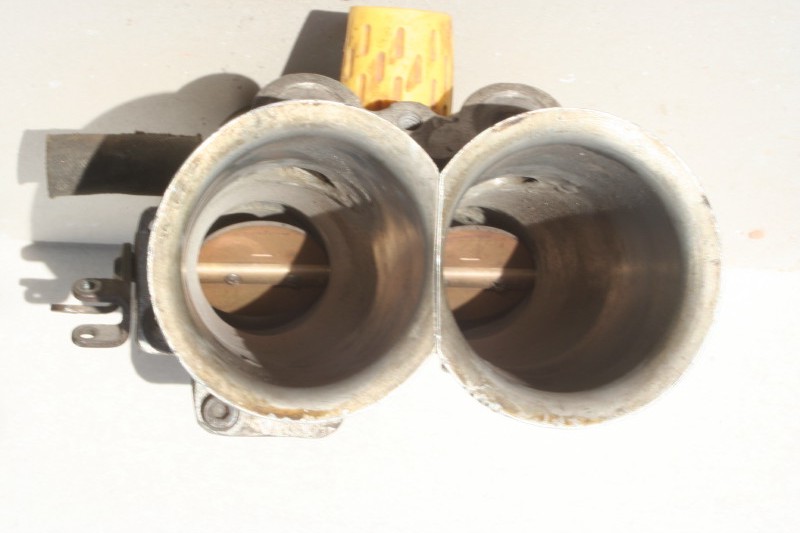
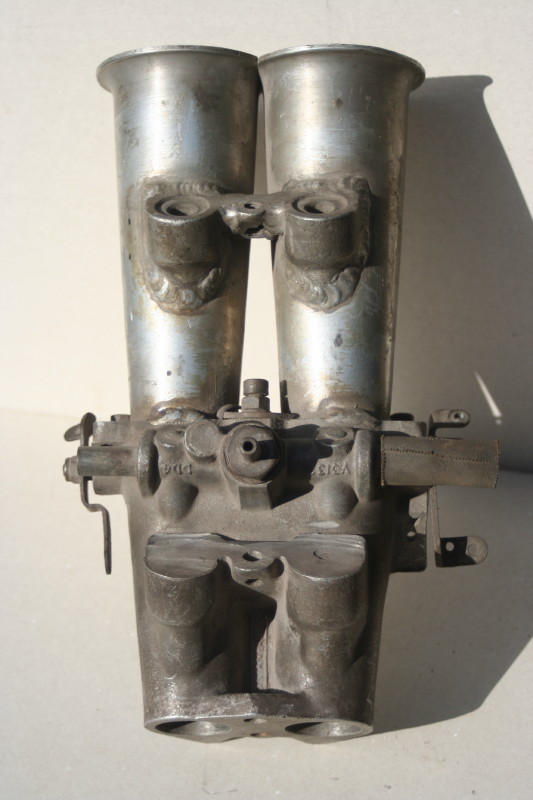
Here are some photos of the bits that make all this work together....
Please also watch this Video showing the use of the hartridge machine.
We have always used this to make properly calibrate units (with Mr K Mills), for more than 2 decades